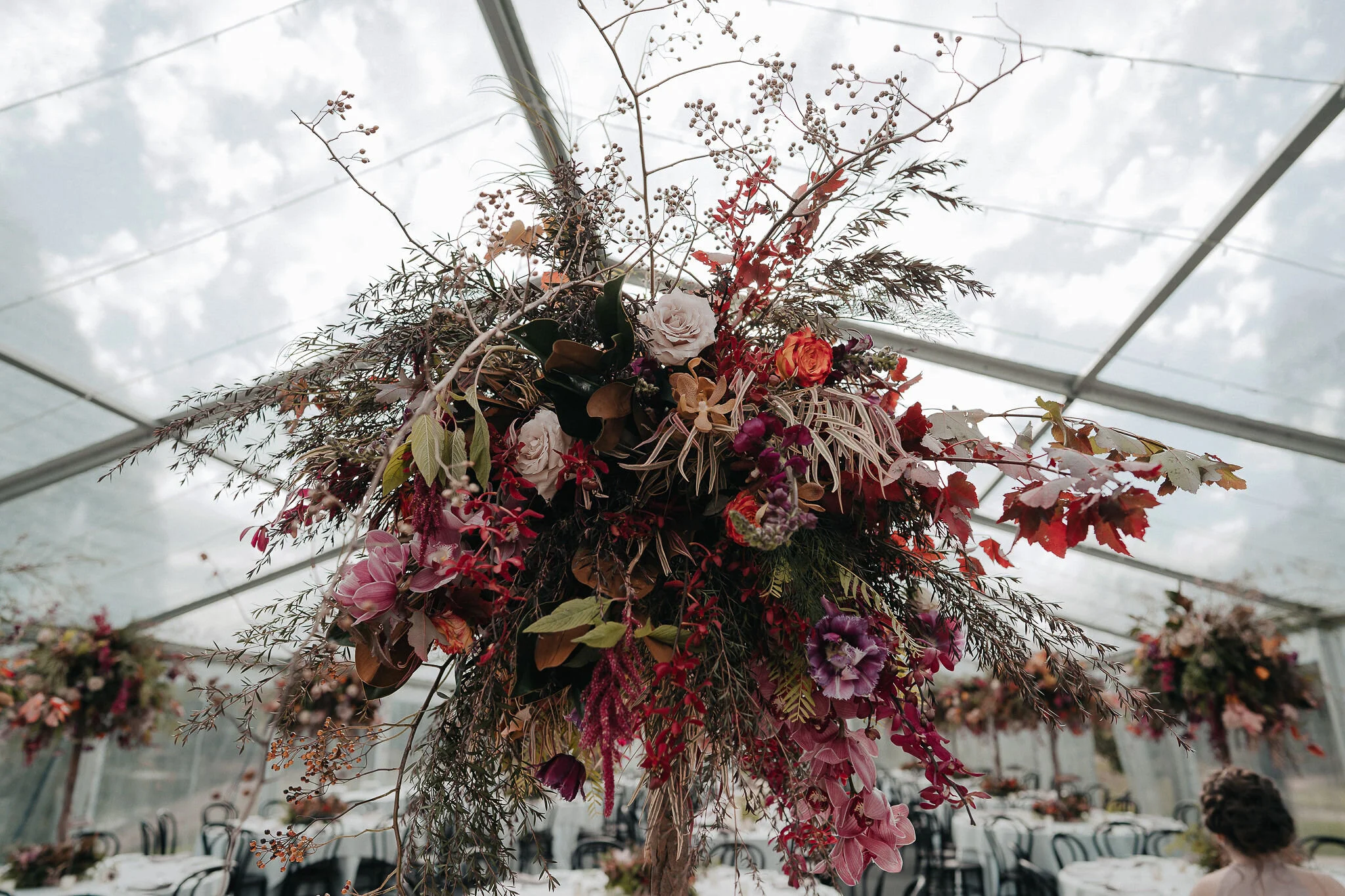
Dried florals went from dusty and dated to genuinely fashionable, and unlike most trends this one has practical logic behind it. Dried flowers for wedding styling do not wilt, do not need water, survive heat and wind, and last forever afterwards.
They also have real limitations. Here is an honest guide to when they work, when they do not, and what they cost in Sydney.
Why couples choose dried
Heat resistance. A February wedding at Balmoral or Chowder Bay is brutal on fresh stems. Dried material does not care.
Wind tolerance. Harbourside and beach ceremonies are windy. Dried elements are light, robust and do not bruise.
No water mechanics. No hydration, no cool storage, no anxious morning. Arrangements can be built weeks ahead.
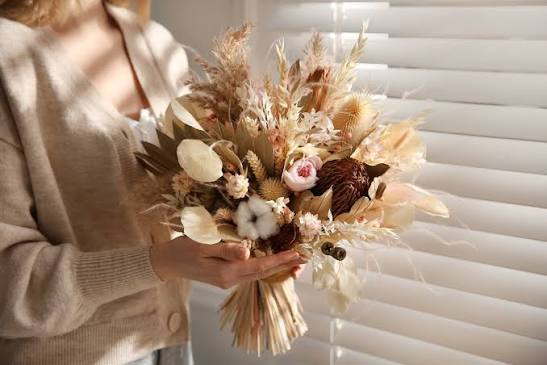
Longevity. The bridal bouquet becomes a keepsake rather than a memory. This is the single most common reason couples choose dried flowers for wedding day work.
Waste reduction. Reusable, rehireable, and not destined for the bin on Sunday morning.
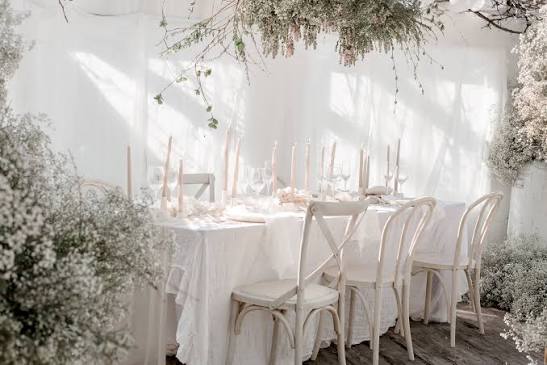
Early setup. Because nothing wilts, installations can go in the night before, which venues love.
Varieties that dry beautifully
- Pampas grass. The signature of the style. Dramatic and enormous, though polarising.
- Bunny tails and other ornamental grasses. Soft, textural, and very photogenic.
- Preserved eucalyptus. Retains colour and a hint of scent. The backbone of most dried arrangements.
- Banksia and protea. Australian natives that dry superbly and hold structure for years.
- Statice, strawflower and helichrysum. Hold colour remarkably well.
- Billy buttons (craspedia). Bright yellow spheres, cheerful and sturdy.
- Lavender. Scent plus colour, though it does shed.
- Baby’s breath (gypsophila). Dries almost perfectly and is inexpensive.
- Bleached and dyed ruscus or palm. For pale neutral palettes.
- Wheat, oats and lagurus. Warm, rustic and beautifully textured.
The honest limitations
No scent. Fresh flowers perfume a room. Dried material largely does not, apart from lavender and eucalyptus.
Fragility. Dried stems snap. They travel well in bulk but do not survive being crushed or grabbed.
Shedding. Pampas in particular drops fluff. Some venues explicitly ban it for this reason, so always ask first.
Limited palette. Naturals, creams, rusts, ochres and bleached whites dominate. Bright true colours usually mean dyed material, which can look artificial.
Dust. Over years, dried arrangements collect dust and cannot really be cleaned.
Not always cheaper. Quality preserved material is labour-intensive to produce and can cost as much as fresh.
The best approach: mix them
Most experienced Sydney florists will suggest combining rather than committing entirely. Fresh focal flowers provide colour, scent and life; dried flowers for wedding structure provide texture, volume, resilience and a keepsake.
Good combinations include fresh garden roses with preserved eucalyptus and bunny tails, or fresh dahlias with dried grasses and banksia. The mix reads as designed and solves the scent problem without giving up durability.
Where dried works best
- Ceremony arches. Built ahead, survives wind and sun, no wilting through a long photo session.
- Bridal bouquet. Becomes a permanent keepsake.
- Buttonholes and corsages. Robust enough to survive hugging, dancing and a full day pinned to a lapel.
- Hanging installations. Light weight makes rigging far easier.
- Escort card and signage displays. Set up a day early without worry.
- Bathroom and bar arrangements. Low-attention spots where fresh flowers are wasted.
Sydney costs
- Dried bridal bouquet: $200 to $500 Dried bridesmaid bouquet: $90 to $200
•• Dried buttonhole: $20 to $40
- Dried arch treatment: $700 to $3,000, often available as a hire piece
- Dried centrepiece: $60 to $180 per table
- Hire versus purchase: hire typically saves thirty to fifty percent on large installations
The hire option is worth chasing. Because dried flowers for wedding installations do not perish, many Sydney florists maintain hire inventory, which is both cheaper for you and better environmentally.
Biosecurity, if you are importing
If you are considering ordering dried or preserved material from overseas, be aware that it is still regulated plant material. The Department of Agriculture, Fisheries and Forestry sets out requirements covering dried and preserved cut flowers and foliage entering Australia, including declaration and inspection obligations.
Buying from an Australian supplier avoids the issue entirely, and Australian native material dries better than almost anything imported anyway.
How drying and preserving actually works
The basic methods are air drying, silica gel, pressing, and glycerine preservation. Air drying suits grasses, statice, lavender and natives. Silica preserves shape and colour best for delicate blooms. Glycerine keeps foliage supple, which is how preserved eucalyptus stays flexible rather than brittle.
The principles are the same ones used in scientific collections. UNSW’s John T. Waterhouse Herbarium holds more than sixty one thousand mostly Australian specimens, largely pressed and dried, which have retained identifiable form and detail for decades. That is the same physics that lets a dried bouquet sit on a shelf for years.
Caring for them afterwards
Keep dried arrangements out of direct sunlight, which bleaches colour fast. Keep them dry, since humidity encourages mould. Dust very gently with a hairdryer on cool, low. Do not spray with water or hairspray.
Display them somewhere they will not be brushed past, and expect five years or more from good quality material.
Questions to ask your florist
Ask whether the venue permits pampas. Ask whether arrangements are for hire or purchase. Ask what proportion is dried versus preserved versus dyed. Ask how the bouquet will be finished so it does not shed onto a dress.
Get those answers and dried flowers for wedding styling becomes one of the most practical decisions you will make, especially for a Sydney summer.