Ask five florists what wedding flowers cost and you will get five different answers, because the question is too vague to answer. The honest reply is that it depends on seven specific variables, and once you know them you can estimate your own quote within a few hundred dollars.
This article breaks the wedding flowers cost down item by item using realistic Sydney figures, then explains what actually moves the number.
Itemised Sydney price ranges
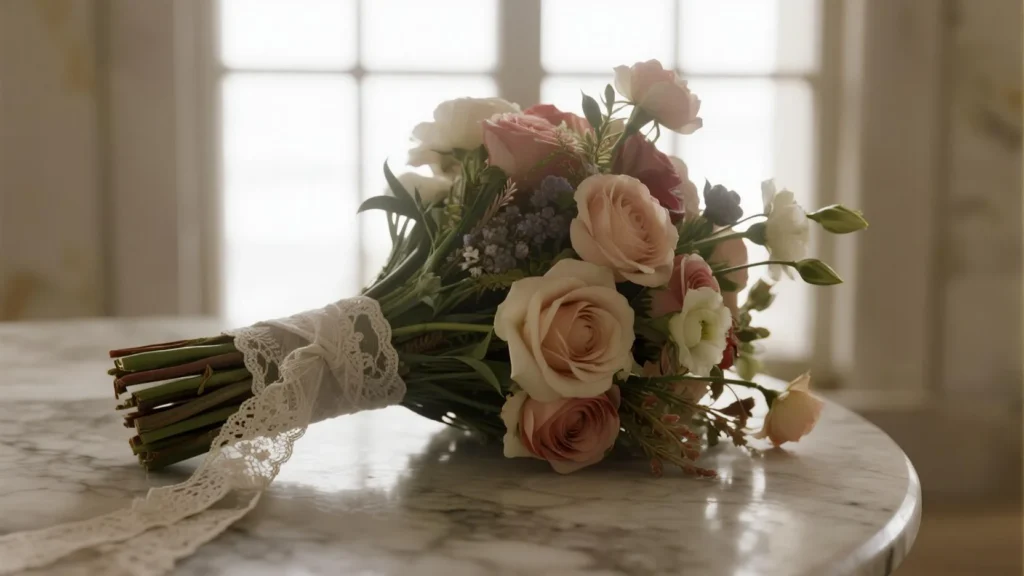
Bridal bouquet: $220 to $600. A compact single-variety bouquet sits at the lower end. A large loose gardenstyle bouquet with premium focal flowers and trailing elements sits at the top.
Bridesmaid bouquet: $90 to $220 each. Usually about half the scale of the bridal bouquet.
Buttonhole or boutonniere: $18 to $40 each.
Corsage: $35 to $70 each, wrist or pin style.
Flower crown or hair flowers: $80 to $250.
Ceremony arch or backdrop: $600 to $3,500 depending on whether it is a partial corner treatment or a fully covered structure. Hire of the structure itself is often extra.
Aisle arrangements: $60 to $200 per pair or per plinth.
Signing table arrangement: $120 to $300.
Low centrepiece: $70 to $180 per table.
Elevated or tall centrepiece: $200 to $500 per table.
Bridal table runner or installation: $500 to $2,500 depending on length and density.
Cake flowers: $60 to $200.
Delivery, setup and pack-down: typically ten to twenty percent of the floral total.
What total wedding flowers cost looks like in practice
For a Sydney wedding of roughly one hundred guests with ten tables:
- Minimal, ceremony-focused: $1,200 to $2,200. Bouquets, buttonholes, low table posies.
- Standard: $2,500 to $5,000. Bouquets, buttonholes, ceremony arch, centrepieces on every table.
- Elevated: $5,000 to $9,000. Larger installations, tall centrepieces, premium varieties, more foliage volume.
- Full floral design: $9,000 and up. Statement installations, hanging elements, luxury imported stems.
Most Sydney couples land between two and five thousand dollars, and floral spend generally sits between six and fifteen percent of the overall wedding budget.
The seven things that move the number
1. Season
The single biggest lever. In-season stems cost a fraction of out-of-season equivalents. Peonies in spring are reasonable. Peonies in March are an imported luxury item.
2. Flower choice
Garden roses, peonies, orchids, waratah and imported specialty stems sit at the top. Chrysanthemum, carnation, alstroemeria, lisianthus and natives deliver enormous value. The gap between the two can be four to one.
3. Volume and density
A loose arch that lets the structure show costs a fraction of a fully covered one. Density, not size, is what drives wedding flowers cost on installations.
4. Labour intensity
Wiring, individual stem treatment, floral crowns and detailed installation work are hours of skilled labour. A hand-tied bouquet takes twenty minutes. A wired cascade can take two hours.
5. Number of items
Ten centrepieces cost ten times one centrepiece. This is where guest counts quietly bite.
6. Venue and access
Multiple venues, stair-only access, tight setup windows, and pack-down at midnight all add labour. Council permits for park ceremonies add coordination too.
7. Date
Spring Saturdays are the most contested slots in Sydney. Winter weddings and Friday or Sunday dates often attract better availability and pricing.
Where to save without the guests noticing
- Repurpose. Move ceremony arrangements to the reception. Pay someone to do it; it is cheaper than buying twice.
- Fewer, bigger centrepieces. Alternate floral tables with candle-and-greenery tables. It reads as intentional design.
- Foliage first. Eucalyptus, olive and native foliage create volume for a fraction of flower prices.
- Go in season. Ask your florist what is spectacular in your month and build from there.
- Choose natives. Waratah, banksia, kangaroo paw and flannel flower are locally grown, dramatic and well priced.
- Drop the low-impact items. Cake flowers, floral crowns and bathroom arrangements are the first things to cut.
- Simplify the arch. A corner or asymmetric treatment photographs beautifully and costs far less than full coverage.
Where not to cut
The bridal bouquet appears in more photographs than any other floral item, often held for hours. Spend there. Similarly, the ceremony backdrop is the frame for your vows and your most-shared photos.
Cutting delivery and setup is a false economy too. Self-collecting flowers on your wedding morning is a wellknown source of chaos.
Understanding what you are comparing
When comparing quotes, insist on itemisation: item by item pricing, labour separated out, delivery and setup separated out, and a clear substitution policy. Two quotes that look twenty percent apart are often thirty percent apart on scope.
It also helps to understand how common your situation is. ABS data on marriages and divorces in Australia reports national and state marriage numbers, marriage rates and popular wedding dates, which is genuinely useful context: the most popular dates are also the dates every florist is fully booked and premium-priced.
Wedding norms themselves are also shifting in ways that affect budgets. Subjects such as Western Sydney University’s Families and Intimate Life examine changing patterns of marriage, cohabitation and partnership, and floristry has followed: smaller bridal parties, fewer buttonholes, more single-variety bouquets, and a lot less of the compulsory item list that inflated wedding flowers cost a generation ago.
Your deposit and payment schedule
Most Sydney florists take a deposit of twenty to thirty percent to hold the date, with the balance due two to six weeks before. Confirm the cancellation and postponement terms in writing, particularly for outdoor weddings.
A realistic approach
Decide your total floral number first. Tell your florist that number honestly at the consultation. A good one will design to it rather than talk you upward, and you will get a far better outcome than pretending the budget is flexible and then cutting items in month eight.