There is a reason some bouquets stop people in a hallway and others just sit there. It is not the price. It is structure.
A great happy birthday bouquet of flowers is built from four parts working together. Once you can see those parts, you can brief a florist properly, judge a photo accurately, and stop paying for arrangements that look thin in real life.
The four layers of a good bouquet
Focal flowers
The stars. Large, characterful blooms that the eye lands on first. Garden roses, peonies, hydrangea, dahlias, waratah, oriental lilies, king protea. A standard bouquet needs three to seven of these, or one if you are going for a single dramatic statement.
Most disappointing bouquets fail here. Too many small flowers and no focal point means nothing to look at.
Secondary flowers
The supporting cast that fills the shape and carries the palette. Lisianthus, spray roses, alstroemeria, ranunculus, tulips, chrysanthemum, carnation. These do the volume work. Texture and filler
The layer that makes a happy birthday bouquet of flowers look designed rather than bunched. Wax flower, thryptomene, berries, seed pods, grasses, astrantia, kangaroo paw. Texture is what separates a florist bouquet from a supermarket bunch. Foliage
Structure, depth and contrast. Eucalyptus, magnolia leaf, pittosporum, ruscus, olive branch, native foliage. Good foliage also stretches your budget, since it adds size for very little cost.
Getting the palette right
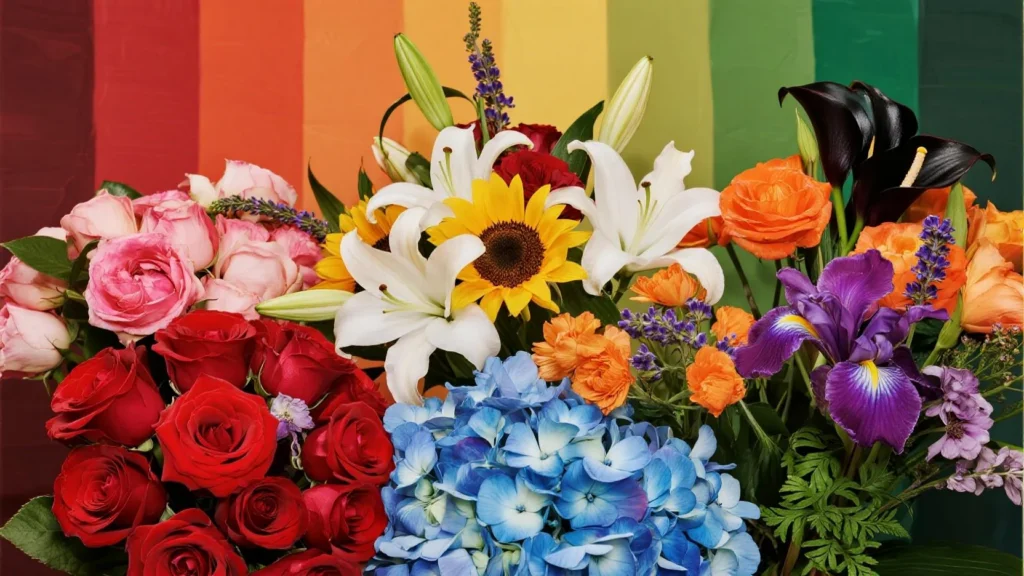
Two or three colours plus green. That is it. More than that and the bouquet loses its shape.
- Yellow, orange and cream: warm and celebratory, the classic birthday choice
- Hot pink, coral and lime: playful and energetic
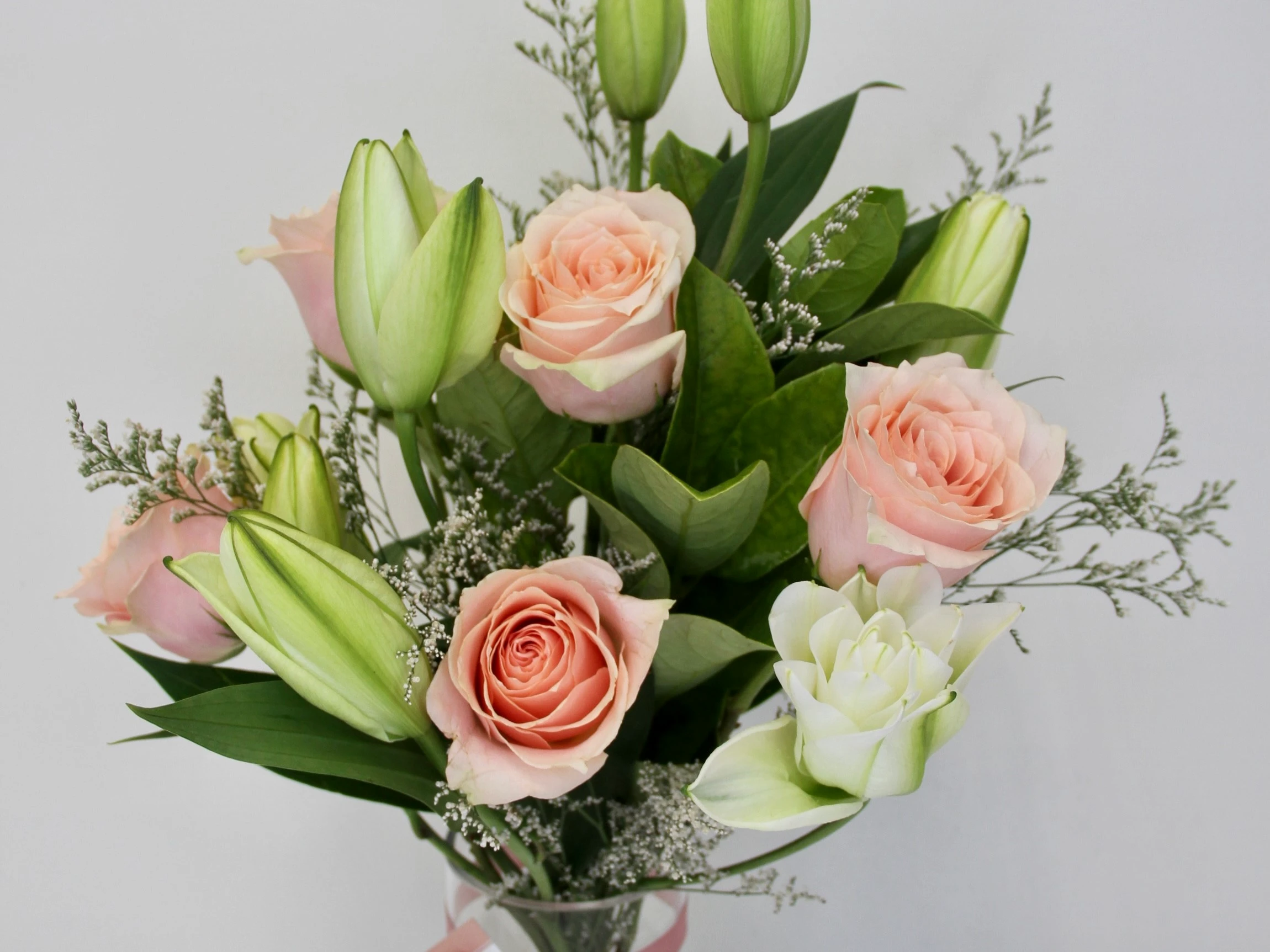
- Blush, cream and dusty pink: soft, romantic, universally liked
- Burgundy, plum and rust: dramatic and sophisticated, superb in autumn
- White, green and silver: clean and elegant, very modern
- Native earth tones: ochre, rust, grey-green, unmistakably Australian
If you know one flower or colour the recipient loves, build around it and let everything else support.
Size: go one step up
Bouquets always look larger in product photography than in a hallway. The single most common regret with a happy birthday bouquet of flowers is going too small.
Rough Sydney guide:
- $40 to $55: ten to fifteen stems, a compact posy for a desk or bedside
- $60 to $85: twenty to thirty stems, fills a medium vase properly
- $90 to $130: premium focal flowers, genuine room presence
- $140 plus: statement scale, ideal for a milestone
For a significant birthday, spend where it shows: one or two exceptional focal stems beat twenty ordinary ones.
Sydney seasonal picks
Buying in season means better quality, lower cost and longer vase life.
Spring. Ranunculus, tulips, sweet pea, boronia, waratah, peonies in the late window. The best three months of the year for this.
Summer. Sunflowers, hydrangea, dahlias, celosia, ginger, heliconia. Heat-tolerant and bold.
Autumn. Garden roses at their peak, dahlias, berries, lisianthus. The richest palette.
Winter. Camellia, hellebore, jonquil, tulips, banksia, wattle. Structural and underrated.
Longevity by variety
If you want the happy birthday bouquet of flowers to still look good next weekend, weight it toward the long performers.
- Two to four weeks: banksia, protea, kangaroo paw, geraldton wax, eucalyptus
- Ten to fourteen days: chrysanthemum, carnation, alstroemeria, lisianthus, orchid
- Seven to ten days: roses, oriental lilies, gerbera, sunflowers
- Four to seven days: peony, tulip, ranunculus, dahlia, hydrangea
A good compromise is a few short-lived focal blooms surrounded by long-lasting structure. As the stars fade, the arrangement can be trimmed down and keeps going.
Why it lands emotionally
A bouquet is a living thing placed in someone’s daily environment for a week. That is a real intervention, not just decoration.
UNSW reported on a review finding that contact with nature was associated with lower depression and anxietys cores alongside physical health measures. Flowers on a kitchen bench are a small, domestic version of the same idea, and the effect repeats every time the recipient walks past.
Wrapping and presentation
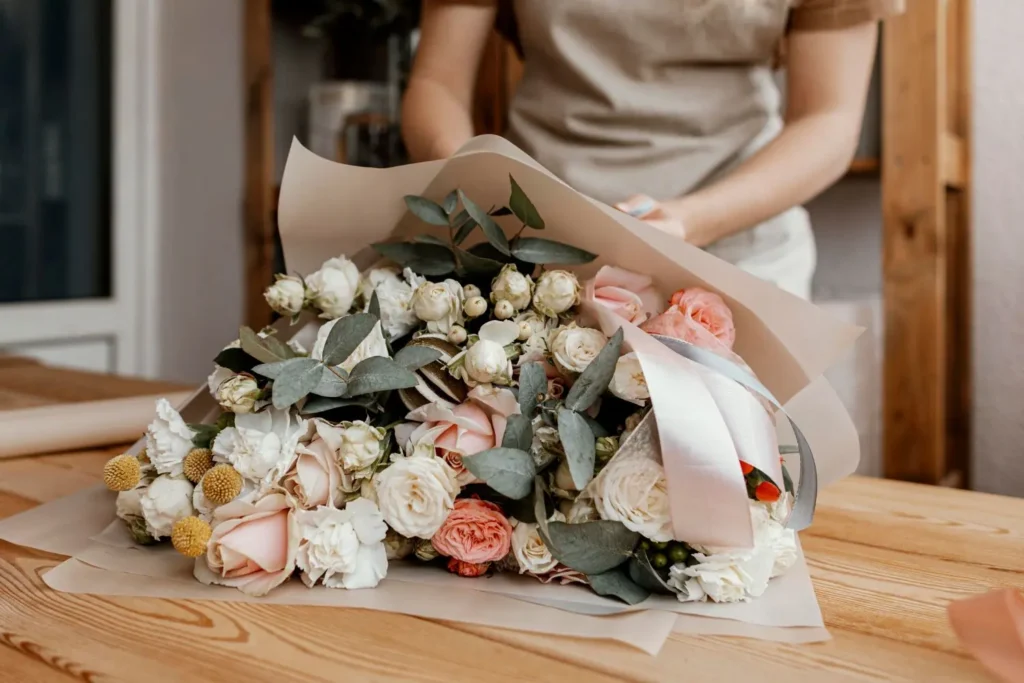
Presentation is the first impression. Good wrapping means a clean binding point, a generous but not fussy paper wrap, an aqua pack or water source for transport, and a ribbon that matches the palette rather than fighting it.
Skip the excess. Layers of cellophane, plastic bags and multiple ribbons look cheap and create waste. A single beautiful kraft or matte wrap reads as far more expensive.
Vase or no vase
Send a wrapped bouquet if the recipient likes arranging flowers and owns vases. Send a vased arrangement if they are busy, elderly, in an office, or hosting a party that day.
For a milestone happy birthday bouquet of flowers, vased almost always wins. It arrives finished and needs nothing.
Aftercare to pass along
Re-cut stems two centimetres on arrival, use a clean vase with fresh water and the full flower food sachet, strip foliage below the waterline, change the water every second day, and keep it away from sun, vents and ripening fruit.
Those habits reliably add three to five days. If the recipient is a gardener, they will already know, and NSW council guides on caring for native plantings at home cover the same principles of watering, pruning and soil care that keep garden-grown flowers thriving in the first place.
How to brief a florist in one sentence
“Fiftieth birthday, autumn, one hundred and twenty dollars, burgundy and rust with garden roses as the focal, loose garden style, vased, delivered Friday morning to a Cremorne apartment with an intercom.”
That is a complete brief. It gives a designer everything they need to build a happy birthday bouquet of flowers that looks intentional, seasonal and personal, which is the entire point.